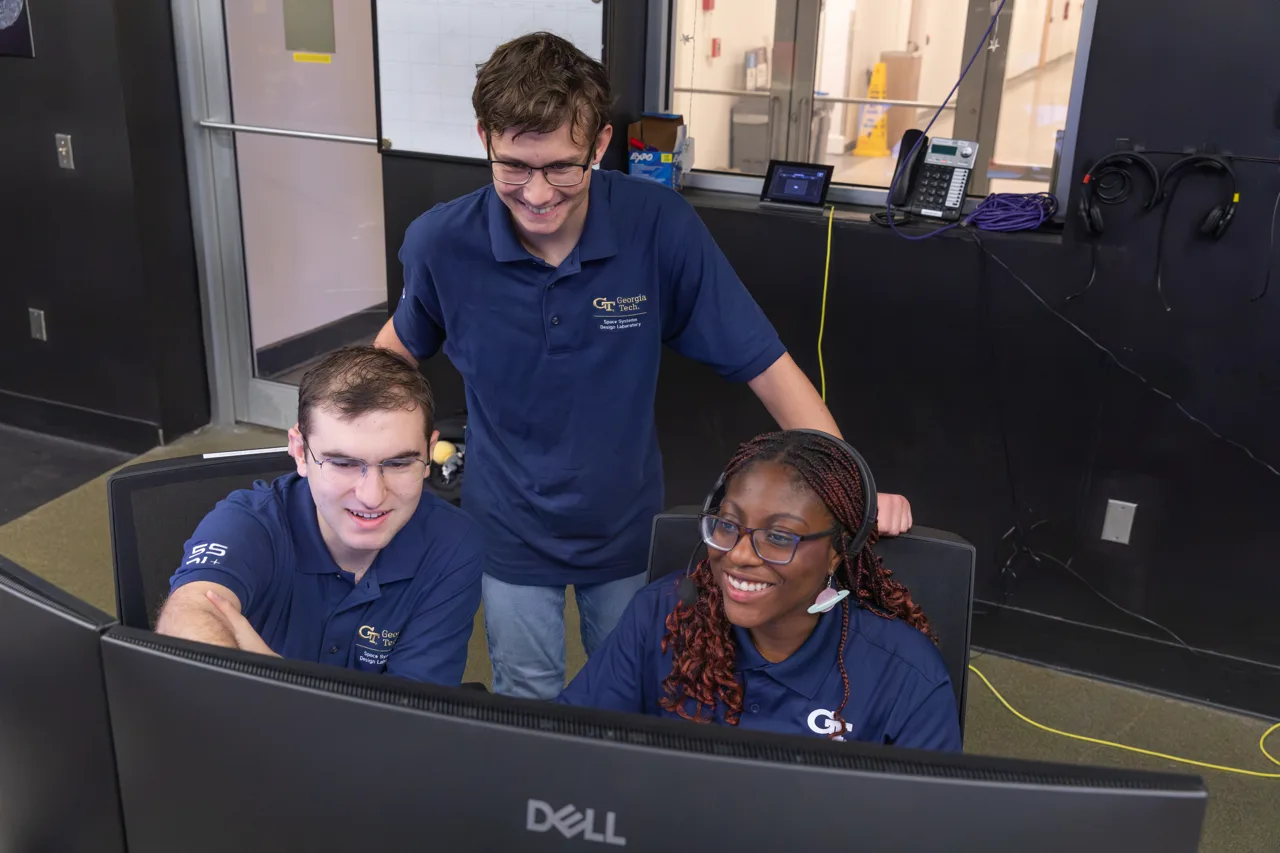
A NASA CubeSat built at Georgia Tech is in orbit, and students made first contact Oct. 1. They will fly it from campus mission control for nine months.
A NASA satellite that Georgia Tech students spent three years designing, building and testing is in orbit. The students are now flying it from a mission control room on the Atlanta campus.
The Georgia Tech team made first contact with the spacecraft at 6:21 p.m. Oct. 1. The first command it sent was “Go Jackets!” The university’s Daniel Guggenheim School of Aerospace Engineering reported the contact in an editor’s note on its announcement of the mission.
The small satellite, a CubeSat, is called the ASCENT Propulsion Dual Mode spacecraft. It is also known as the Green Propulsion Dual Mode, or GPDM. It was set to launch on a SpaceX Falcon 9 rocket from Vandenberg Space Force Base in California, the school said, and the school’s note confirms it reached orbit.
What the mission involves
From Georgia Tech’s announcement:
- Length: a planned nine months, with more than 1,000 hours of propulsion testing
- Orbit: low Earth orbit about 310 miles up, which is higher than the International Space Station
- The test: a new propulsion system that runs on one shared fuel supply, giving either high-thrust chemical power for fast maneuvers or slower, more efficient electric thrust
- The fuel: a less-toxic propellant called ASCENT, which the school said is safer and easier to handle than hydrazine
- The flying: students will move the satellite up and down an altitude range of about 3 miles, using an onboard star camera and a GPS receiver to track it
- The partners: the students work with professor Glenn Lightsey and NASA’s Marshall Space Flight Center
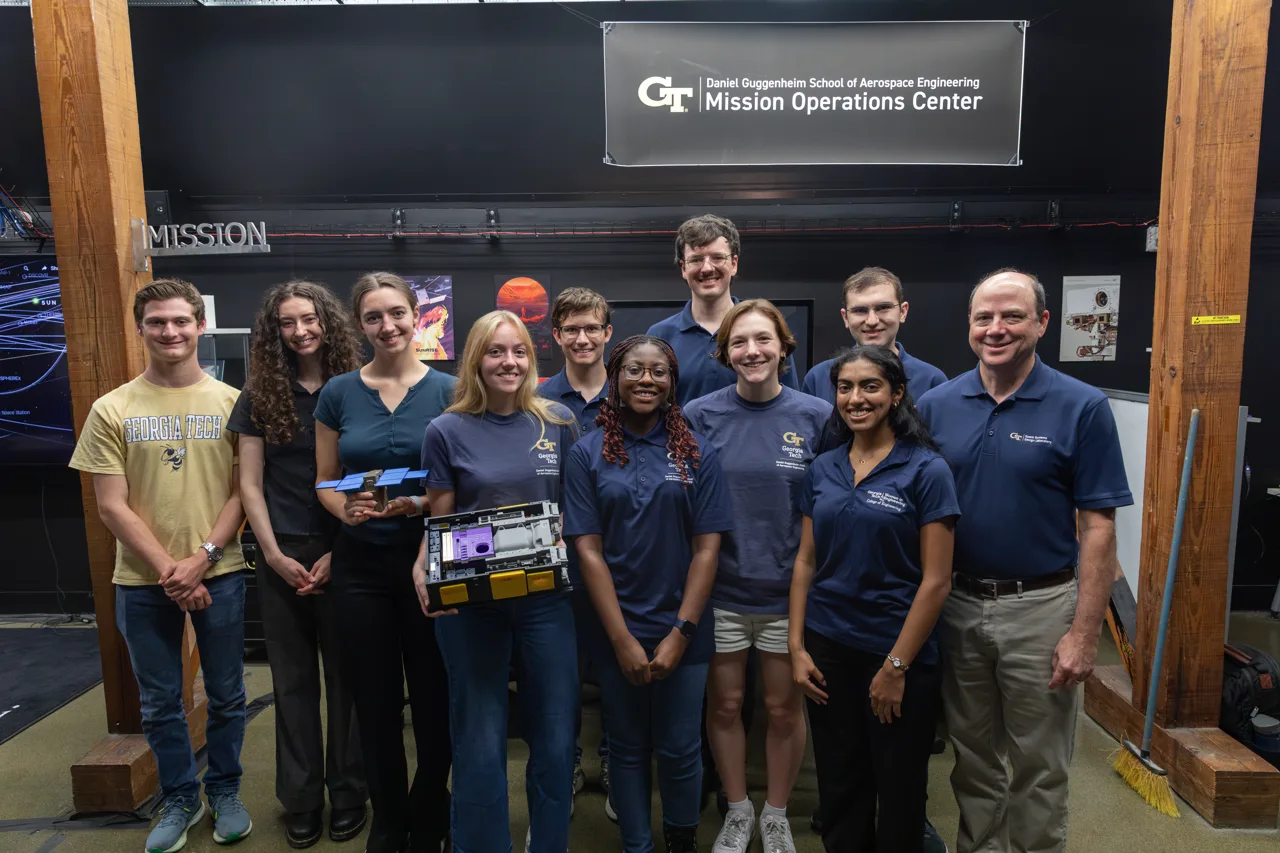
Student operators will staff the Space Systems Design Laboratory’s Mission Operations Center in daily shifts. Georgia Tech said they completed flight-certification training in ground station operations, command sequencing and telemetry analysis.
Andrew Basin, a doctoral student who has been on the project from the start, said the spacecraft is the first of its kind to combine dual-mode propulsion.
“It’s exciting to fly a satellite that is pushing the bounds of what’s possible in propulsion technology,” Basin said.
Who is running it
Master’s student Ryan McKee is the mission operations manager. He has worked on mission planning and on assembling, integrating and testing the spacecraft for two years, the school said.
“It’s an honor to work with and lead a team of exceptionally smart and capable people,” McKee said before launch.
Lightsey holds the John W. Young Chair in the aerospace engineering school.
“What makes this mission especially meaningful is that our students have been involved every step of the way,” he said.
Master’s student Nina Otebele, one of the mission controllers, pointed to the team’s reliance on NASA and on operators from different fields. “You can’t do a mission like this alone,” she said.
It is not the first spacecraft flown from the campus. Georgia Tech said its students also worked on NASA’s Lunar Flashlight CubeSat mission in 2021.
What it means for you
A working NASA mission control is now running on North Avenue, staffed largely by students. The work is a nine-month test, so the results that matter most, whether the dual-mode engine performs as designed, will come later. We will report them when Georgia Tech or NASA publishes them.
For families with a student headed to college, the mission shows the kind of hands-on space work the Space Systems Design Laboratory offers. Lightsey said three groups of students have worked on this spacecraft so far.
Have your say